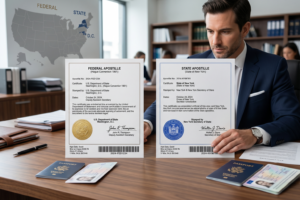
There is a lot of paperwork involved with applying for a job, a visa, or a residency overseas. One of the most essential documents you might need is an FBI background check apostille. For first-time applicants, the process might appear intimidating, with concerns over reports, fingerprints, and certifications that sound complicated.
Initially, such terms may appear overwhelming as many people are unsure of what they are, why they are required, or how to get them. The entire process appears to be a lot to manage, mainly when you are already preparing for an international move. However, in reality, once you know about them, the process becomes easy to manage.
In this guide, you will have a clear idea about these documents, why they matter, and the best way to get them processed without any delays.
What Is an FBI Background Check?
An FBI background check is an official record that is issued by the Federal Bureau of Investigation. It verifies an individual’s history with law enforcement agencies in the United States.
Identity History Summary is the official name of this document, but it is often known by several other terms, such as:
- FBI background check
- FBI report
- FBI criminal record
- FBI clearance
- FBI fingerprint report
You may find the wording different, but the terms refer to the same official document.
The reason behind the need for an FBI background check is to provide a record of any prior arrests, charges, or related details connected to your identity. If no such records are found, the document will clearly mention that no arrest data exists. On the other hand, if a record exists, it clearly shows all records that are maintained under the FBI system.
Foreign governments often request this document to verify that applicants seeking visas, employment, residency, or citizenship meet the legal and character standards of the country before granting approval.
Why Are Fingerprints Required?
Fingerprints are important for the completion of an FBI background check.
You should submit your fingerprints in the application process. For the submission, you can get your fingerprint with the help of a live electronic scan or even use traditional ink.
Fingerprints are the main part of the application process, and individuals refer to the document as a “fingerprint report.” But the final background check document that you receive is your FBI Identity History Summary.
Fingerprints are necessary since they provide accurate identification details. A person’s identity can never be used through only names and date of birth. Fingerprints help in preventing mistakes and ensure that the report aligns with the right person.
What Is an Apostille?
Getting an FBI background check alone may not be yet valid for use overseas. Many countries require an apostille to use your FBI report internationally.
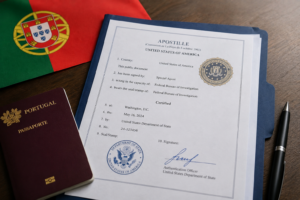
An apostille is a special certificate that makes your FBI background check report legally valid to be used in another country.
You can think of it as an international stamp of approval. Without an apostille, other countries will not accept your FBI background check.

The apostille confirms:
- The authenticity of the FBI document
- The signature on the document is legitimate
- It can be recognized in countries that operate under the Hague Apostille Convention
It is essential to know that an apostille will not confirm or approve any criminal record. Instead, it will verify the authenticity of the FBI background check.
Why Is an Apostille Necessary?
Many countries are members of the Hague Apostille Convention. These member countries accept an FBI background check apostille from other member countries.
An apostille makes your FBI background check legally acceptable in the country you plan to move to, which is part of the Hague Convention. On the other hand, a different legalization process might be required instead of an apostille if the country is not a member of the Hague Convention.
Common Situations Where You May Need an FBI Apostille
In situations where applicants are dealing with legal or immigration business in another country, they may need an FBI background check apostille. Generally, it involves verifying background records before obtaining approval for visas, residency, or other official requirements.
Common reasons why people might need an FBI background check apostille are:
- Work visas
- Employment overseas
- Working abroad
- Residency applications
- Dual citizenship
- Marriage registration in another country
- International adoption
- Long-term student visas
- Business transactions
Always ensure to check with the immigration office or the embassy of the country you are applying to, as requirements might vary.
Step-by-Step Overview of the FBI Background Check Process
Having a clear idea of the steps that are involved can make the process easier.
Step 1: Visit the FBI Website to Start Your Application
Visit the official website of the FBI at fbi.gov and go to the section called Identity History Summary Checks. It is here that you start your background check request.
Fill in the online application and observe the given instructions. Ensure that all the personal details are correctly filled out to prevent problems in processing.
You will also be required to pay a potential FBI processing fee of $18 at the time of submission.
Step 2: Submit Your Fingerprints
Once you fill out the application, you need to provide your fingerprints.
Fingerprints may be submitted electronically, through an approved channeler, or transferred by mail by a traditional ink fingerprint card. Electronic fingerprinting is generally quicker and minimizes the chances of rejection due to unclear prints.

The FBI and its national database search your fingerprints to provide your report.
Step 3: Receive Your FBI Background Check
After being processed, you will be sent your official FBI Identity History Summary.
Their results are usually delivered through email in PDF format to most candidates, although it is possible to request a mailed copy.
At this stage, this document is official, but is not yet internationally authenticated.
Step 4: Apply for the Apostille
In order to use your FBI background check outside the USA, you will have to get an apostille. Since the FBI report is a federal document, it has to be presented to the U.S. Department of State for an apostille or another approved state-level location.
The apostille certificate is issued after the necessary steps are completed and then attached to your FBI background check. For those who are dealing with tight deadlines, choosing professional FBI apostille services can streamline the entire process. An experienced company offers expedited apostille processing and secure return delivery with tracking details to ensure documents are prepared for use in another country.
How Long Does the Entire Process Take?
The processing times for the documents vary based on:
- Whether or not fingerprints are submitted digitally or by mail
- Current FBI processing volume
- Apostille processing times
Electronic fingerprint submissions are typically faster than traditional ink submissions. Apostille processing times might take several weeks, as it depends on government workloads and mailing times.
Since visa and residency applications often have strict deadlines, it is important to start processing sooner. If you face tight timelines, then professional apostille services might offer expedited options. There are a few companies that return an FBI background check apostille in a 24-hour turnaround, depending on submission timing and eligibility.
Planning strategically can help prevent unwanted stress and delays.
How Long Is the FBI Background Check Valid?
In general, FBI background checks do not expire. However, it will only be accepted by most foreign countries and governments, provided it was issued within:
- 3 months to 6 months
Always remember to enquire about the rules of your destination country before submitting.
State Background Check vs. FBI Background Check
There are certain applicants who believe that a state police clearance is what is needed.
Nevertheless, a state background check will only include law enforcement records in the state in question. An FBI background check encompasses a national database across all states.
Most foreign governments will require the national FBI report rather than any other state-based documentation.
Common Mistakes First-Time Applicants Should Avoid
The major cause behind delays is simple misunderstandings. Here are a few mistakes that people make:
- Submitting a state background check instead of an FBI report
- Not getting an apostille for the FBI background check
- Waiting for too long or submitting an expired report
- Not realizing that it can take longer than anticipated for the entire process
- Failing to verify whether or not the destination country needs an apostille
It is important to carefully review every requirement before applying to save time and make the process easier.
Final Thoughts
Getting an FBI background check apostille may initially appear complicated. Nevertheless, having a clear understanding of what the process entails can help you handle things more efficiently. The key aspect in this is planning ahead, adhering to all instructions, and being careful with your documents. Delays occur because of small mistakes; thus, being organized can save you valuable time.
At Fast FBI Apostille, we offer professional FBI background check apostille services that will simplify the process for you. We offer expedited solutions, proper document submission, and quick returns when deadlines are tight. Contact us today and allow our team to help you move forward confidently!
Frequently Asked Questions
Can someone else submit my apostille request on my behalf?
Yes. Documents may also be presented to the apostille process by a third party or professional service, with your necessary authorization.
What happens if my fingerprints are rejected by the FBI?
When rejected on the basis of low quality, new fingerprints should be resubmitted to proceed with your background check request.
What should I do if my personal information is incorrect on the FBI report?
Your immediate step should be to contact the FBI and follow their correction process before requesting an apostille certification.